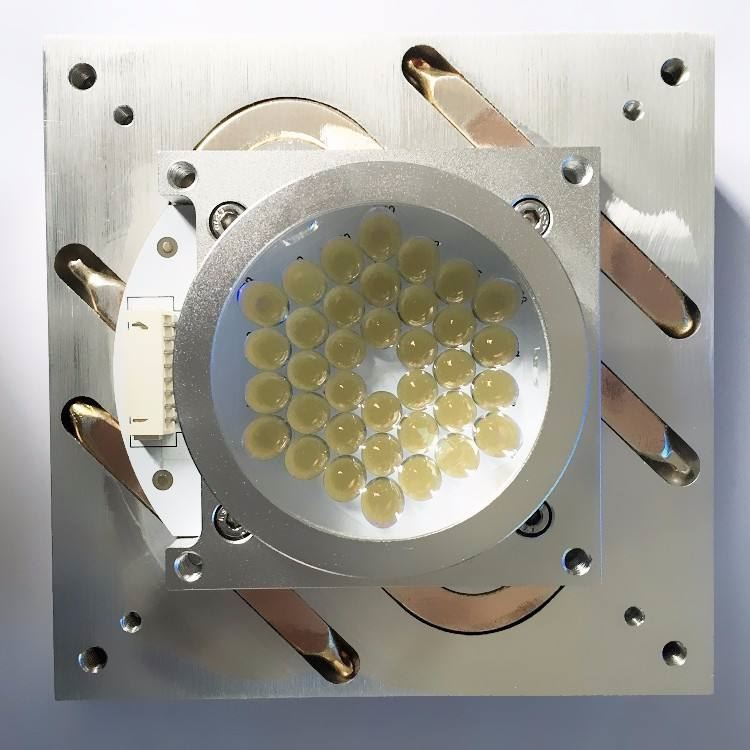
Punts de disseny de grumolls LED a l'exterior
Due to the complex working environment of LED outdoor lighting lamps, affected by natural conditions such as temperature, ultraviolet, humidity, rain on rainy days, sand and dust, chemical gas and so on, over time, it will cause serious LED light failure. Therefore, in the end, outdoor lighting designers should consider the impact of these external environmental factors on LED outdoor lighting lamps.

1. La carcassa i el dissipador de calor estan dissenyats en conjunt per resoldre el problema de calefacció del LED. Aquest mètode és millor. En general, es seleccionen alumini o aliatge d'alumini, coure o aliatge de coure i altres aliatges amb bona conducció de calor. La dissipació de calor inclou la dissipació de la calor per convecció de l'aire, la dissipació de la calor per refredament del vent fort i la dissipació de la calor del tub de calor. L'elecció del mètode de dissipació de calor té un impacte directe en el cost de les làmpades. S'ha de considerar exhaustivament i s'ha de seleccionar el millor esquema juntament amb els productes dissenyats.

2. Actualment, la majoria dels llums LED (principalment fanals) produïts estan muntats amb led d'1W en sèrie i paral·lel. Aquest mètode té una resistència tèrmica més alta que els productes amb tecnologia d'embalatge avançada i no és fàcil produir làmpades d'alta-qualitat. O s'utilitzen mòduls de 30 W, 50 W o fins i tot més grans per al muntatge per aconseguir la potència requerida. Els materials d'embalatge d'aquests LED estan encapsulats amb resina epoxi i gel de sílice. La diferència entre els dos és que l'envàs de resina epoxi té poca resistència a la temperatura i és fàcil d'envellir durant molt de temps. L'embalatge de gel de sílice té una bona resistència a la temperatura, per la qual cosa s'ha de prestar atenció a la selecció quan s'utilitza.
It is better to use multi chip and heatsink as a whole, or use aluminum substrate multi chip packaging, and then connect it with the heatsink through phase change material or heat dissipation silicone grease. The thermal resistance of the product is one to two less than that of the product assembled with LED devices, which is more conducive to heat dissipation. For lamps using LED module, the module substrate is generally copper substrate. Good phase change material or good thermal grease shall be used for its connection with the external heatsink to ensure that the heat on the copper substrate can be transmitted to the external radiator in time. If it is not handled well, it is easy to accumulate heat, resulting in too high temperature rise of module core and affecting the normal operation of LED chip.

3. Radiator is a key component of LED lamps. Its shape, volume and heat dissipation surface area should be designed to achieve benefits. If the heatsink is too small, the working temperature of LED lamps is too high, which will affect the luminous efficiency and service life. If the heatsink is too large, it will consume more materials, increase the product cost and weight, and reduce the competitiveness of products.